Prisoners of Geography Book Review

Updated: 4 days ago

Prisoners of Geography by Tim Marshall is a popular geopolitics book built around one direct idea: maps still shape power. The book explains how mountains, rivers, oceans, borders, ports, plains, deserts, and strategic chokepoints influence the behaviour of states. For readers who follow world affairs but struggle to connect geography with conflict, trade, diplomacy, and security, this book gives a clear starting point.
The real buying question is not whether this is the deepest book on geopolitics. It is not. The real question is whether its simplicity helps more than it weakens the analysis. That is the central tension of the book. It is readable, memorable, and practical, but it also compresses huge political and historical subjects into broad explanations.
The best reader is someone who wants to understand geopolitics without starting with a dense academic text. If you want to understand Russia’s search for strategic depth, China’s concern with maritime access, America’s geographic advantages, Europe’s security problems, or the strategic importance of the Arctic, the book gives you a useful framework. It helps readers see global politics through physical constraints rather than disconnected headlines.
The main limitation is oversimplification. Geography is important, but it does not explain everything. Law, ideology, leadership, economics, technology, religion, colonial history, institutions, and domestic politics also shape international affairs. My verdict is clear: Prisoners of Geography is worth buying as a first serious geopolitics book, but it should not be treated as the final word on world politics.
1. The Real Buying Verdict
Prisoners of Geography is a strong buy for beginners and educated general readers who want a clear introduction to geopolitics. It is a fair buy for intermediate readers who want a refresher, but it is a weaker choice for advanced readers who need academic depth, detailed sourcing, or specialist regional analysis.
The book’s value comes from clarity. Tim Marshall explains geopolitics through physical constraints: mountains, rivers, coastlines, plains, ports, deserts, chokepoints, and resources. This helps readers understand why states often behave in ways that seem repetitive or predictable, especially in regions shaped by security fears, limited access, or difficult terrain.
The weakness is that geography can appear too dominant in the explanation. Geography creates pressure, but it does not remove political choice. That distinction is important for serious readers. Buy the book if you want a readable framework. Do not buy it expecting a complete academic study of international relations.
2. The Problem This Book Solves
Many readers follow international news but do not understand the deeper structure behind it. They see headlines about Ukraine, Taiwan, NATO, China, Russia, the Middle East, the Arctic, or Africa, but those stories often feel separate. Prisoners of Geography helps connect them by asking the reader to look at the map first.
This approach works because geography affects security, trade, military options, access to resources, and diplomatic behaviour. A country’s coastline can support naval power. A mountain range can protect or isolate. A narrow strait can become a global pressure point. A lack of warm-water ports can shape a state’s strategic anxiety for generations.
The book is useful for readers interested in international relations, diplomacy, history, journalism, political geography, security studies, or global affairs. It does not make the reader an expert, but it gives enough structure to understand more serious debates later. That is the book’s strongest function: it makes the reader less passive when reading the news.
A practical example is energy security. Many readers hear about the Strait of Hormuz, the South China Sea, or Arctic shipping routes without fully understanding why narrow passages and maritime access carry such strategic weight. Marshall’s map-based approach makes these issues easier to grasp without turning the subject into a technical lecture.
3. The Strength Behind the Book’s Popularity
3.1 The writing is clear without being childish
The biggest strength of Prisoners of Geography is readability. Marshall writes like a foreign affairs journalist explaining complex issues to intelligent non-specialists. He does not bury the reader in theory, and he does not assume prior knowledge of military history, diplomacy, international law, or political geography.
That matters for buyers because many geopolitics books fail at the first barrier: they are too dense for the people who most need them. This book keeps the reader moving. The chapters are accessible, the examples are concrete, and the central argument is easy to remember.
This benefits students, general readers, journalists, policy beginners, and professionals who need geopolitical literacy but do not need a specialist textbook. A book that readers actually finish has more practical value than a more sophisticated book that remains unread. That is one reason this book works so well as an entry point.
3.2 The map-based structure improves retention
The book is memorable because it connects arguments to physical space. Russia’s flat western approaches, China’s coastline, America’s oceans, Europe’s fragmented geography, the Middle East’s strategic position, and the Arctic’s changing relevance are all easier to remember when linked to maps.
This affects the buying decision because the book has long-term usefulness. Readers can return to its framework when global news changes. A crisis in Taiwan, a conflict in Ukraine, a dispute in the South China Sea, or a new Arctic security debate becomes easier to interpret when the reader already understands the geographical pressure behind it.
The book does not simply give facts. It changes the reader’s instinct. After reading it, the reader is more likely to ask better questions: where are the ports, what are the borders, which routes are exposed, what terrain protects this state, and what physical constraint limits its options?
3.3 The updated edition is the better purchase
For most new buyers, the updated edition is the version to choose. The world has changed significantly since the original book appeared, especially because of the Russia-Ukraine war, China’s growing power, Taiwan tensions, Middle East instability, European defence debates, Japan’s strategic shift, India’s rise, and Africa’s geopolitical importance.
The core argument of the book remains the same, but recent events make an updated version more useful. Geographical constraints do not disappear quickly, but their political meaning changes as wars, alliances, technology, trade routes, and military priorities evolve. A book about world power needs to reflect that.
If you already own an older edition, you may not need to buy the updated edition unless you want the newer material. If you are buying Prisoners of Geography for the first time, the updated edition is the more sensible choice. It gives the same accessible framework with a more current geopolitical context.
4. Where the Book Becomes Less Convincing
4.1 Geography sometimes carries too much weight
The main weakness of Prisoners of Geography is that geography can feel too decisive. The book does not claim that geography explains every political event, but the framework is so strong that some readers may come away with an overly deterministic view of international affairs.
This matters because states are not controlled only by rivers, mountains, ports, and borders. Leaders make decisions. Institutions shape behaviour. Economies create incentives. Ideologies mobilise populations. Legal rules affect legitimacy. Technology can reduce some geographic barriers while creating new strategic vulnerabilities.
A practical example is Russia. Geography helps explain Russia’s concern with buffer zones and access routes, but it does not fully explain the Kremlin’s political system, propaganda, war decisions, legal violations, economic choices, or internal power structure. The book is useful here, but it is incomplete.
This weakness should not stop beginners from buying the book. It should simply control expectations. Read it as one strong lens, not as a complete explanation of world politics.
4.2 Some regions receive limited depth
The book covers a large part of the world in limited space. That makes it readable, but it also creates uneven depth. Africa, Latin America, the Middle East, Europe, India, China, Russia, and the Arctic all deserve more detailed treatment than one popular book can provide.
General readers may not see this as a major problem because they are buying orientation, not specialist expertise. A regional expert will notice the compression more quickly. Some explanations may feel too broad, especially where historical, cultural, economic, legal, and domestic political factors need more space.
This does not make the book a bad purchase. It means the buyer must understand the category. Prisoners of Geography is a primer. It gives the first layer of analysis and helps readers decide what to study next.
4.3 It is not an academic textbook
Some buyers may expect a textbook because the subject sounds serious. That expectation is wrong. Prisoners of Geography is popular nonfiction written for broad understanding, not a formal academic work built around extensive theory, debate, and citation.
That is not automatically a flaw. In fact, it is part of the book’s success. Many readers need a serious but accessible explanation before they are ready for more technical material. Marshall gives that bridge.
The limitation appears when readers need formal research quality. If you are writing a university essay, policy paper, or legal analysis, this book should not be your main source. Use it for orientation, then move to academic geopolitics, regional history, international relations theory, and specialist studies.
5. Buyer Review Patterns
Visible buyer-review patterns are generally positive. Readers repeatedly praise the book for being readable, informative, engaging, and useful for understanding political events. The most satisfied buyers seem to be people who wanted a clearer way to interpret world affairs without getting lost in academic language.
The strongest positive pattern is practical understanding. Buyers often value the book because it helps them connect geography with conflict, power, trade, and diplomacy. That is exactly what the book promises, and for many readers it delivers.
The negative patterns are also consistent. Some readers find the book too broad, too simple, or too geographically deterministic. Others feel that certain regions are compressed or that the analysis lacks enough balance. Readers who expect a deep academic book are more likely to be disappointed than readers who expect a clear introduction.
Prices, ratings, reviews, and availability may change. The key lesson from buyer patterns is expectation management. If you buy it as a first geopolitics book, it is likely to satisfy. If you buy it as a complete explanation of international affairs, it will not be enough.
6. Value for Money
The value judgment is strong for the right reader. Do not judge this book only by price or page count. Judge it by usefulness, readability, credibility, durability, and practical application. A book that helps you understand news, diplomacy, war, trade routes, alliances, and strategic rivalry can deliver value long after the first reading.
Its strongest value is for readers who are building geopolitical literacy. They will get a framework they can reuse whenever major international events appear in the news. That makes the book more durable than many current-affairs books tied too closely to one event.
The value is weaker for advanced readers. If you already know geopolitics, the book may feel like a useful refresher rather than a major learning experience. If you need depth, nuance, and regional complexity, you will need additional books.
Check the current price before buying because prices and availability may change. My value verdict is clear: strong value for beginners, fair value for intermediate readers, and limited value for specialists.
7. How It Compares With Alternatives
7.1 Compared with The Power of Geography
The Power of Geography is the natural next book if you enjoy Marshall’s style. It continues the same broad, readable, map-based approach and looks more toward future geopolitical questions. It makes most sense after Prisoners of Geography, not before it.
Start with Prisoners of Geography if you are new to the subject. It gives the core framework and explains why geography still shapes political power. Then read The Power of Geography if you want more of the same style applied to additional strategic regions.
7.2 Compared with The Revenge of Geography
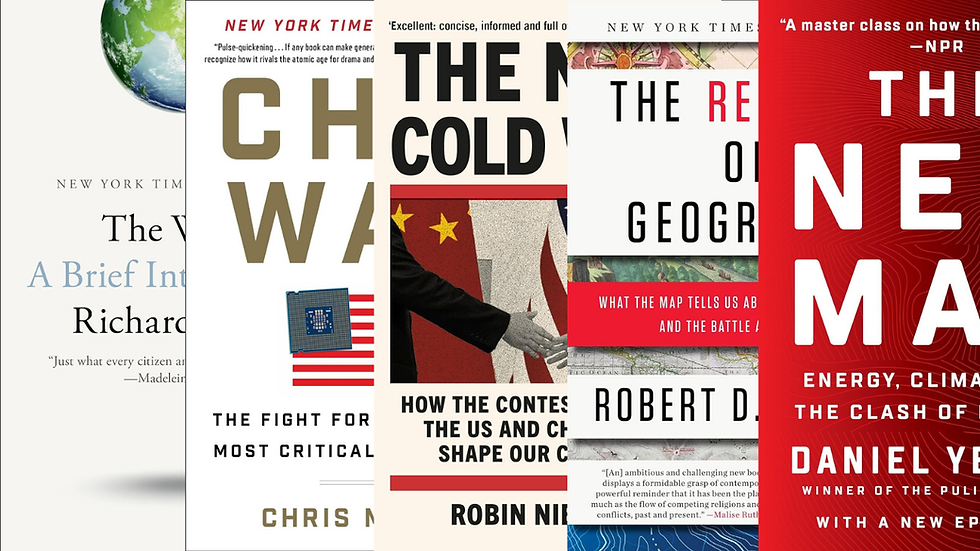
Robert D. Kaplan’s The Revenge of Geography is a better fit for readers who want something more demanding and reflective. It is usually less beginner-friendly than Marshall’s book, but it offers a more serious reading experience for those already comfortable with history and strategy.
The choice depends on your level. Marshall is easier to read and better as a first book. Kaplan is better as a second or third book for readers who want a deeper geopolitical argument.
7.3 Compared with academic geopolitics books
Academic geopolitics and international relations books usually offer more nuance, stronger sourcing, and more careful treatment of competing explanations. They are also slower, denser, and less attractive to casual readers. That is the trade-off.
Prisoners of Geography wins on accessibility. Academic books win in depth. A serious reader should not choose only one category forever. Start with Marshall if you need a clear foundation, then move to more specialised work.
8. Best and Worst Fit
The best reader for Prisoners of Geography is curious, intelligent, and not yet deeply trained in geopolitics. It is ideal for readers interested in international relations, diplomacy, history, global affairs, military strategy, political geography, journalism, and world news.
The book also works well for students at the beginning of their studies. It gives them a practical framework before they move into more difficult material. For professionals, it can also be useful as a fast way to sharpen geopolitical awareness.
The worst fit is the reader who wants a neutral academic text, a detailed regional study, or a book focused on international law. It is also not ideal for readers who dislike broad arguments. Marshall simplifies in order to explain, and that style will not satisfy everyone.
Conclusion
Prisoners of Geography is worth buying if you want a clear, readable, map-based introduction to geopolitics. Its strength is orientation. It helps readers understand why geography still shapes power, conflict, trade, security, and diplomacy.
Its weakness is oversimplification. Geography matters, but it does not explain everything. The best readers will use the book as a starting point and then move to more detailed works on history, law, economics, political theory, and regional affairs.
The updated edition is the best option for new buyers because it reflects more recent geopolitical developments. If you are buying it now, that is the version I would choose.
Final judgment: buy it if you want your first serious geopolitics book. Skip it if you need academic depth, legal analysis, or specialist regional expertise.
Also Read
FAQ
Is Prisoners of Geography worth buying?
Yes, Prisoners of Geography is worth buying if you want a clear first book on geopolitics. It gives readers a practical way to understand how geography affects power, conflict, trade, borders, and security. The book is strongest when it helps readers connect current events to physical realities such as coastlines, mountains, plains, ports, and strategic chokepoints.
It is less impressive for advanced readers who already study international relations, security, or political geography. They may find the arguments too broad or too simplified. Still, as an introduction, the book does its job well. It gives readers a framework they can use immediately, then challenge and deepen later.
Is Prisoners of Geography good for beginners?
Yes, beginners are probably the best audience for the book. The writing is clear, the structure is easy to follow, and the map-based approach gives readers a simple way to understand global politics. You do not need prior knowledge of international relations theory, diplomacy, military history, or international law.
The book is especially useful if you want to understand why Russia, China, the United States, Europe, the Middle East, India, Africa, and the Arctic face different strategic pressures. It will not make you an expert, but it will make later reading much easier. That is exactly what a good introductory book should do.
Which edition should I buy?
Most new readers should buy the updated edition. The world has changed significantly since the original book appeared, especially because of Ukraine, China’s rise, Taiwan tensions, Middle East conflicts, European defence, India’s growth, Japan’s strategic posture, and Africa’s geopolitical relevance.
If you already own the older edition, you do not automatically need to buy the updated version. The core argument remains similar. But if you are buying the book for the first time, the updated edition makes more sense because it gives the same framework with a more current context.
Is the audiobook better than the paperback?
The audiobook is better for convenience, but the paperback is better for learning. Because Prisoners of Geography depends heavily on maps, the printed or Kindle version has an advantage. You can pause, look at the maps, return to sections, and connect the argument to physical geography.
The audiobook can still work well because the writing is narrative and accessible. It is a good option for commuting, walking, or listening while doing routine tasks. But if your goal is retention and serious understanding, the paperback is the stronger choice.
Is Prisoners of Geography too basic?
It depends on your level. For beginners, it is not too basic. It is exactly the kind of book that can make geopolitics easier to understand. The simplicity is part of its value because it helps readers build a framework before moving into more complex material.
For advanced readers, it may feel too basic. The book often gives broad explanations and does not always explore competing causes in enough depth. Geography is important, but it is not the only driver of international affairs. The best judgment is this: it is too basic as a final book, but useful as a first book.
Is Prisoners of Geography practical or academic?
It is practical, not academic. The book is designed to help readers understand the world, not to provide a formal scholarly framework. It is useful for interpreting news, conflicts, alliances, trade routes, and strategic rivalries.
It does not offer the depth or balance expected from an academic textbook. It also does not provide a detailed international law analysis. Readers who need formal research material should use it only as background. For general understanding, though, its practical value is strong.
What should I read after Prisoners of Geography?
If you like Marshall’s style, read The Power of Geography next. It continues the same broad, readable approach and is a natural follow-up for readers who want more map-based geopolitical analysis.
If you want something deeper, read Robert D. Kaplan’s The Revenge of Geography. It is more demanding and better suited to readers who want a more serious geopolitical argument. After that, move into international relations theory, political geography, security studies, and regional history. Prisoners of Geography gives the first framework, not the whole education.
Is Prisoners of Geography still relevant?
Yes, especially in the updated edition. Geography remains relevant because many strategic constraints change slowly. Coastlines, mountain ranges, plains, chokepoints, rivers, ports, and resource locations continue to shape how states think about security and power.
The book is still useful because it explains structural pressures behind many current issues. That said, geography alone cannot explain everything. Technology, economics, law, ideology, leadership, and domestic politics also matter. The book remains relevant when read as one important lens, not as the only explanation.