The Back Channel by William J. Burns Book Review

Updated: 4 days ago

The Back Channel is the kind of diplomacy book that attracts serious readers but also raises a fair buying question: Is it a genuinely useful insider account, or mainly a polished defense of the American foreign policy establishment? That question matters because William J. Burns is not writing as an outsider, journalist, or academic critic. He writes as one of the most experienced American diplomats of his generation, after a 33-year Foreign Service career that included senior roles as U.S. ambassador to Russia, U.S. ambassador to Jordan, under secretary of state for political affairs, and deputy secretary of state.
The book’s strength is also its limitation. Burns gives readers access, judgment, and institutional memory. He explains diplomacy from inside the machinery: cables, private meetings, quiet negotiations, personal trust, strategic warnings, and the slow work that rarely appears in headlines. But he is not a radical critic of the system he served. He is measured, careful, and often restrained. For some readers, that makes the book more credible. For others, it may feel too loyal to the world of professional diplomacy.
That is the real buying tension behind The Back Channel. If you want a loud political exposé, this is probably not the right book. If you want a serious account of how diplomacy works when public rhetoric meets private negotiation, it is a strong choice.
The book covers major episodes from the end of the Cold War to Russia, Iraq, Afghanistan, the Middle East, Libya, and the secret nuclear talks with Iran. It is built around the argument that diplomacy is not decorative or secondary. It is one of the central tools of statecraft.
This review is written for readers deciding whether to buy the book, not for readers looking for an academic summary. The short judgment is clear: The Back Channel is worth buying if you want a serious, readable, and durable diplomatic memoir. It is less suitable if you want a short beginner’s guide, a negotiation manual, or a dramatic political thriller.
1. The clear buying verdict
The Back Channel is worth buying for readers who want to understand diplomacy as a profession, not just foreign policy as a set of public decisions. Burns gives the reader something that ordinary commentary cannot easily provide: a view of how diplomatic judgment is formed before policies become speeches, crises, or headlines.
The book is strongest when it shows the gap between public politics and private statecraft. Public debate rewards certainty, slogans, and visible action. Diplomacy often requires ambiguity, patience, discretion, and repeated contact with difficult counterparts. Burns is effective because he does not romanticize that process. He shows it as slow, imperfect, and sometimes ignored by political leaders.
The best buyer is a reader interested in diplomacy, international relations, geopolitics, U.S. foreign policy, Russia, the Middle East, or Iran's nuclear diplomacy. Students, policy professionals, journalists, lawyers, researchers, and educated general readers will probably get the most value from it. The book has enough narrative detail to remain readable, but enough substance to be more than a casual memoir.
The wrong buyer is someone looking for scandal, partisan combat, or a simple “how to win negotiations” book. Burns is too disciplined for that kind of reading experience. His style is reflective rather than explosive. That is not a defect, but it is a real limitation for buyers expecting drama.
2. What makes this memoir different
Many political memoirs are built around self-justification. The author explains why they were right, why critics were unfair, and why history should treat them kindly. The Back Channel has some of that insider quality, but it is more useful than the average memoir because Burns is focused less on personal reputation and more on the profession of diplomacy itself.
The book’s central idea is that diplomacy remains essential even when it looks weak, slow, or unfashionable. Burns uses his career to show how back channels, private trust, and institutional expertise can shape outcomes in ways the public rarely sees. That does not mean diplomacy always succeeds. In fact, some of the most valuable parts of the book involve failure, warning signs, and strategic misreading.
Burns draws on newly declassified cables and memos, which give the book more weight than a memory-only memoir. That matters for buyers because it makes the book feel more grounded. The reader is not only getting a polished recollection. The narrative is supported by the documentary habits of a diplomat trained to observe, record, and report.
This is why The Back Channel works better as a serious foreign policy book than as a personality-driven memoir. Burns himself matters, but the real subject is the practice of American diplomacy after the Cold War. The reader sees how optimism, power, threat perception, bureaucracy, and leadership all affected decisions over several decades.
3. The strongest reason to buy it
The strongest reason to buy The Back Channel is Burns’s combination of access and restraint. Access alone is not enough. Many insiders have access but produce shallow books. Restraint alone is not enough either. A careful book can become dull if it refuses to say anything meaningful. Burns largely avoids both problems.
His best material comes when he explains how diplomats read a situation before a crisis becomes obvious. That includes reading leaders, watching institutional behavior, assessing the mood inside foreign capitals, and understanding when official language hides bigger strategic change. Those are practical insights for anyone interested in international affairs.
The Russia sections are especially valuable because Burns served as ambassador in Moscow and had direct experience with the deterioration of post-Cold War relations. The book does not reduce Russia's policy to one simple mistake or one simple villain. It shows accumulated mistrust, competing assumptions, and the consequences of strategic overconfidence.
The Iran material is also important because it shows why quiet channels can matter before official negotiations are politically possible. Readers interested in nuclear diplomacy will find this more useful than a standard news account because Burns explains the diplomatic method behind the headlines.
4. The main weakness buyers should know
The main weakness of The Back Channel is that Burns writes from inside the establishment he is defending. He is critical of mistakes, but he is not detached from the system. Buyers need to understand that before purchasing the book.
This does not make the book dishonest. It means the reader should treat it as an insider account, not as the final word on U.S. foreign policy. Burns is persuasive when explaining the value of diplomacy, but he is less aggressive when interrogating the deeper assumptions of American power. Readers who want a more critical, non-American, or postcolonial analysis will need other books alongside this one.
The tone can also feel too controlled. Burns is not trying to entertain through conflict, scandal, or personal attacks. That makes the book more professional, but it also means some sections require patience. A buyer expecting a fast political drama may find the pacing slower than expected.
Length is another practical issue. The paperback edition listed by Penguin Random House is 544 pages, so this is not a light introduction to world affairs. The audiobook is listed at just over 17 hours. That is good value for serious readers, but it may be too much for someone wanting a brief overview.
5. Readability and structure
The Back Channel is serious, but it is not written like an academic textbook. Burns writes in a clear, controlled style, and the book is organized around the arc of his diplomatic career. That makes it easier to follow than a dense theoretical work on international relations.
The prose is strongest when Burns combines observation with judgment. He is good at describing atmosphere, personality, and institutional pressure without turning the book into gossip. This matters because diplomacy can easily become abstract. Burns keeps bringing the reader back to rooms, meetings, warnings, cables, and decisions.
The book still demands attention. A reader with no interest in modern history may struggle with the number of countries, leaders, conflicts, and administrations involved. It is not difficult because the writing is unclear. It is difficult because the subject is wide.
For a serious general reader, that is acceptable. The book rewards slow reading. It is the kind of title that can be read once for narrative and returned to later for specific chapters on Russia, Iraq, Iran, or the role of the State Department.
6. Buyer-review patterns
Visible buyer-review patterns are strongly positive. Amazon’s listing shows a high average rating with hundreds of global ratings at the time checked, and the recurring praise focuses on the book’s clarity, insider detail, historical value, and seriousness. Prices, ratings, reviews, and availability may change.
The most satisfied readers seem to be buyers who already wanted a serious book on diplomacy or U.S. foreign policy. They value Burns’s experience and appreciate the behind-the-scenes explanation of how major decisions were shaped. These readers are not looking for a loud memoir. They are looking for judgment, context, and professional perspective.
The likely disappointed readers are those expecting a faster, more dramatic book. Some buyers may also want sharper criticism of U.S. foreign policy than Burns provides. That is a fair expectation, but it is not really what this book promises. The Back Channel is a defense of diplomacy, not a demolition of American power.
The marketing and buyer experience appear broadly aligned. The book is presented as a major diplomatic memoir and a case for renewing diplomacy. That is exactly what it delivers. The mismatch happens only when buyers confuse “inside account” with “explosive exposé.”
7. Value for money
The Back Channel offers strong value because it has long-term usefulness. Some political books age quickly because they are tied to one administration, election, scandal, or media cycle. This book is more durable because it deals with recurring problems: how states negotiate, how leaders misread each other, why institutions matter, and why diplomacy is often undervalued until a crisis becomes dangerous.
Its value is highest for readers who will use it as more than casual reading. A student can use it to understand diplomatic practice. A professional can use it to reflect on negotiation, policy process, and institutional memory. A general reader can use it to better understand why foreign policy is rarely as simple as public debate suggests.
The book also has credibility value. Burns is not speculating from the outside. He spent decades in the system, served under multiple presidents, and occupied roles that gave him direct exposure to high-level diplomacy. That does not make his interpretation beyond criticism, but it does make the book more valuable than a generic foreign policy overview.
The format also helps. The print version is better for study, annotation, and reference. The audiobook is better for convenience, especially because the length makes it suitable for commuting or long listening sessions. Buyers who want to absorb and revisit details should choose print. Buyers who mainly want the narrative can choose audio.
8. Better than similar alternatives?
The Back Channel is not a replacement for every diplomacy or geopolitics book. It has a specific role. It is best understood as an insider memoir about diplomatic practice and American foreign policy after the Cold War.
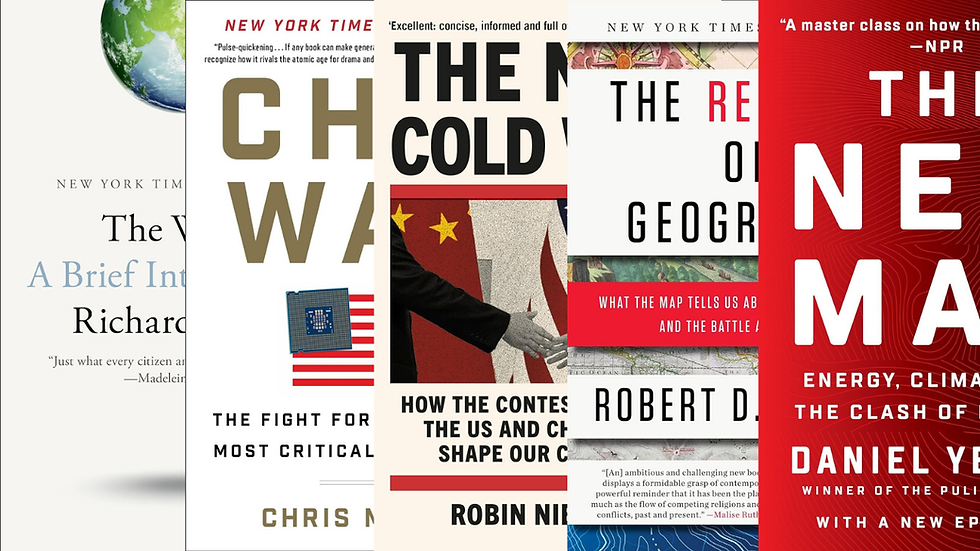
Compared with Prisoners of Geography by Tim Marshall, Burns’s book is more institutional and less introductory. Marshall explains global politics through geography and is easier for beginners. Burns explains how diplomacy functions inside government. Buy Marshall first if you need a broad geopolitical map. Buy Burns if you want to understand how policymakers and diplomats operate inside that map.
Compared with Henry Kissinger’s Diplomacy, The Back Channel is more contemporary and personal. Kissinger gives a broader historical and strategic framework. Burns gives a practitioner’s account of recent U.S. diplomacy. Buy Kissinger for grand strategy and historical theory. Buy Burns for modern diplomatic experience.
Compared with Samantha Power’s The Education of an Idealist, Burns is less personal and less emotionally driven. Power’s book is stronger on moral ambition and human rights advocacy. Burns’s book is stronger on diplomatic craft, state behavior, and institutional judgment. The better choice depends on whether the reader wants moral biography or professional statecraft.
9. Best reader fit
The Back Channel is best for readers who already care about foreign affairs and want to move beyond headlines. It is especially useful for people interested in diplomacy as a career, international law, international relations, strategic studies, conflict resolution, or U.S. foreign policy.
Law students and international law readers may find it valuable because it shows the political environment in which legal arguments and diplomatic positions are used. The book does not function as a legal analysis, but it helps explain the practical world in which treaties, negotiations, sanctions, and security decisions operate.
It is also useful for readers who want a more realistic understanding of American power. Burns does not present diplomacy as magic. He shows that skilled diplomats can warn, negotiate, and open channels, but they cannot always overcome political decisions, strategic illusions, or institutional weakness.
The book is less suitable for readers who want simple answers. If your main question is “who was right and who was wrong,” Burns may frustrate you. His approach is more nuanced. That is precisely why the book is useful, but it also means the reader must be willing to think through complexity.
Conclusion
The Back Channel is a strong buy for serious readers who want a credible insider account of modern American diplomacy. Its main strength is Burns’s authority: he writes from decades of direct experience, not from distance. Its second strength is the book’s durability. The issues it covers — Russia, Iran, Iraq, American overconfidence, institutional decline, and the value of quiet negotiation — remain relevant beyond the publication cycle.
The book’s weakness is equally clear. Burns is an establishment figure making an establishment case for diplomacy. He is reflective and often candid, but he is not writing a radical critique. Buyers who want a more confrontational account of U.S. foreign policy should not expect that here.
The best judgment is this: buy The Back Channel if you want a serious, readable, and authoritative diplomatic memoir that explains how statecraft works behind public politics. Do not buy it if you want scandal, speed, or a simplified guide to geopolitics. For the right reader, it is one of the more valuable modern books on diplomacy.
Also Read
10. FAQ
10.1 Is The Back Channel worth reading?
Yes, The Back Channel is worth reading if you want a serious insider account of diplomacy rather than a dramatic political memoir. William J. Burns explains how diplomacy works through private channels, careful reporting, institutional experience, and long-term judgment. That makes the book especially useful for readers interested in international relations, foreign policy, geopolitics, and modern American power.
The book is not ideal for readers who want quick entertainment or a short introduction. It is long, detailed, and written in a restrained style. But that restraint is part of its value. Burns is not trying to shock the reader. He is trying to show why diplomacy matters before, during, and after major crises. For serious readers, that makes the book a worthwhile purchase.
10.2 What is The Back Channel about?
The Back Channel is about William J. Burns’s career in American diplomacy and his argument that diplomacy needs renewal. The book follows major events across several decades, including the end of the Cold War, relations with Russia, conflict in the Middle East, Iraq, Afghanistan, Libya, and secret nuclear diplomacy with Iran.
The title refers to the quiet, private side of diplomacy. Burns shows how unofficial or confidential channels can create possibilities that public diplomacy cannot. The book is not only a personal memoir. It is also a defense of diplomatic professionalism at a time when foreign policy is often dominated by military thinking, public messaging, and short-term politics.
10.3 Is The Back Channel good for beginners?
The Back Channel can work for beginners, but it is not the easiest first book on international relations. A beginner with a genuine interest in world affairs can follow it because Burns writes clearly and explains events through experience. The narrative style makes difficult issues more accessible than a formal academic text.
However, complete beginners may find the scope demanding. The book moves across different countries, administrations, crises, and diplomatic problems. Readers with no background in U.S. foreign policy, Russia, the Middle East, or the Cold War may need to read slowly. As a first serious diplomatic memoir, it is a good choice. As a simple introduction to geopolitics, it may be too detailed.
10.4 Is The Back Channel biased?
The Back Channel is written from the perspective of a senior American diplomat, so it naturally reflects an American institutional viewpoint. Burns believes in diplomacy, the State Department, and the role of professional foreign service. Readers should not approach the book as a neutral global history.
That does not make it weak. It means the book should be read for what it is: an informed insider account. Burns does criticize mistakes and strategic failures, especially the tendency to undervalue diplomacy or rely too heavily on military power. Still, readers who want a more critical view of American hegemony, intervention, or post-Cold War policy should read this book alongside other perspectives.
10.5 Is the book mostly about Russia?
No, The Back Channel is not mostly about Russia, but the Russia sections are among its strongest parts. Burns’s experience as U.S. ambassador to Russia gives him direct authority on the collapse of post-Cold War optimism and the rise of a more confrontational relationship with Moscow.
The book is broader than Russia. It also covers the Middle East, Iran, Iraq, Afghanistan, Libya, and the wider question of American leadership after the Cold War. Buyers interested mainly in Russia will find valuable material, but they should expect a full diplomatic memoir rather than a single-country study. The broader scope is part of the book’s value.
10.6 Is it better in print or audiobook?
The print version is better if you want to study the book, underline passages, return to specific chapters, or use it as a reference for writing, research, or professional development. The book contains enough detail that serious readers may benefit from having the physical or ebook version available.
The audiobook is better for convenience. Since the book is long, audio can make it easier to complete during commuting, walking, or traveling. The choice depends on your purpose. If you want careful reading, choose print or an ebook. If you mainly want the narrative and broad lessons, the audiobook is a practical option.
10.7 Is this book useful for diplomacy students?
Yes, the Back Channel is useful for diplomacy students because it shows how diplomacy operates in real situations. It explains the importance of reporting, timing, judgment, personal relationships, institutional memory, and private communication. These are difficult to learn from theory alone.
The book should not replace textbooks on diplomatic law, international relations theory, or negotiation. It does not provide a structured curriculum. Its value is practical and experiential. Students can use it to understand how professional diplomats think, how foreign policy options are framed, and why quiet diplomacy often matters more than public performance.
10.8 Should I buy The Back Channel?
You should buy The Back Channel if you want a serious book on diplomacy with long-term value. It is especially worthwhile if you care about U.S. foreign policy, Russia, the Middle East, Iran negotiations, or the role of diplomats in preventing and managing crises.
You should probably skip it if you want a short, light, or highly dramatic read. The book is detailed and measured. It rewards attention but does not chase entertainment. The best buyer is someone who wants to understand how diplomacy actually works inside government. For that reader, The Back Channel is a strong and credible purchase.