On Grand Strategy Book Review: Serious Value or Too Broad?
- Edmarverson A. Santos

- Jun 9
- 12 min read
Updated: Jul 29

Introduction
This on grand strategy book review is for readers who are drawn to strategy, diplomacy, international relations, military history, and leadership, but who need a clear answer before buying John Lewis Gaddis’s book. The central question is simple: Does On Grand Strategy genuinely improve strategic judgment, or is it mainly an elegant historical essay with a grand title?
On Grand Strategy is a 384-page book by John Lewis Gaddis, the Yale historian best known for his work on the Cold War and George F. Kennan. The book grows out of the grand strategy tradition associated with Yale and uses examples from classical history, literature, political thought, war, and statecraft to explore how leaders connect ambition with limits. It is not a conventional textbook, not a policy manual, and not a step-by-step guide to building a national strategy.
That is the real buying tension. The title sounds practical and commanding. A buyer may expect a direct framework for strategy, something useful for policy planning, diplomatic work, military leadership, business decisions, or geopolitical analysis. Gaddis gives something different. He offers a historically rich education in judgment: how leaders overreach, how goals outrun resources, how flexibility can save a strategy, and how moral purpose becomes dangerous when detached from reality.
For the right reader, this is a strong purchase. Students of international relations, diplomacy readers, military professionals, policy analysts, executives, and serious general readers can get long-term value from it. The book sharpens the reader’s ability to think about ends, means, timing, terrain, restraint, and consequence. Those are not abstract ideas. They are the difference between ambition that works and ambition that collapses.
The main limitation is equally clear. Readers looking for a practical strategy toolkit may feel the book moves too indirectly through history and literature. On Grand Strategy rewards patience. It suits readers who enjoy Herodotus, Sun Tzu, Machiavelli, Clausewitz, Lincoln, Roosevelt, Tolstoy, and Isaiah Berlin, being used to explain strategic judgment. It is less suitable for buyers who want checklists, templates, contemporary case studies, or direct professional instruction.
1. The real buyer question
1.1 The book in plain terms
On Grand Strategy is a book about matching large goals with limited capabilities. Gaddis is not mainly interested in strategy, branding, motivation, or ambition. He is interested in the harder problem: how leaders decide what they can realistically do without losing the direction that makes action meaningful.
The book moves across historical and literary examples to show why strategy fails when imagination outruns capacity. Some leaders see the destination but ignore the ground beneath their feet. Others adapt to the ground but lose sight of the destination. Gaddis’s strongest idea is that good strategy needs both discipline and flexibility.
This is why the book is more useful than many leadership titles. It does not treat confidence as a strategy. It does not sell ambition as wisdom. It trains the reader to ask a colder question: do the goals, resources, timing, institutions, allies, and risks actually fit together?
2. On grand strategy book review: the verdict
2.1 Buy it for judgment, not templates
Buy On Grand Strategy when the goal is to become a more careful strategic thinker. The book is especially valuable for readers who want to understand why leaders fail despite intelligence, power, confidence, and good intentions. Its best lessons are about proportion, restraint, adaptability, and the danger of confusing vision with control.
Do not buy it as your only practical strategy guide. It will not teach you how to write a foreign policy strategy, build a policy memo, design a military campaign plan, or structure a negotiation. It improves the mind behind those tasks, but it does not perform those tasks for the reader.
That distinction matters. A buyer expecting a manual may be disappointed. A buyer expecting a serious historical education in strategic judgment will likely find the book worth owning, revisiting, and recommending.
2.2 The best reader for this book
The best reader is educated, curious, and comfortable with a book that moves through history rather than reducing everything to bullet points. This includes international relations students, diplomacy readers, military professionals, foreign policy observers, public policy students, and leaders who want a more mature understanding of power.
The book is also useful for general readers who follow world affairs and want to move beyond daily news. Gaddis helps readers see the deeper problem beneath many political failures: leaders often want outcomes that their resources, institutions, geography, or timing cannot support.
The weakest fit is the reader who wants a fast application. A buyer looking for modern case studies on China, Russia, cyber conflict, artificial intelligence, or current U.S. foreign policy will need companion books. On Grand Strategy gives foundations, not current-affairs coverage.
3. The argument that carries the book
3.1 Ends, means, and the danger of overreach
Gaddis defines grand strategy around the alignment of potentially unlimited aspirations with necessarily limited capabilities. That definition drives the book. Strategy begins when desire meets constraint. Without that meeting point, ambition becomes fantasy.
This gives the book a useful seriousness. Many political, military, and business failures come from a mismatch between goals and means. States promise more than they can sustain. Leaders confuse moral urgency with feasible action. Organizations chase expansion without understanding the costs. Gaddis gives readers historical language for that problem.
The book’s best chapters show that strategic failure is rarely just stupidity. It often comes from partial intelligence: a leader understands one major truth but ignores another. The danger is not only ignorance. The danger is imbalance.
3.2 The fox and the hedgehog problem
One of the book’s central devices is the contrast between the fox and the hedgehog. The hedgehog knows one big thing and moves in a direction. The fox knows many things and adapts to complexity. Gaddis does not simply choose one over the other. He shows why an effective strategy needs both.
That is a strong teaching method because it avoids simplistic leadership advice. Pure hedgehogs become rigid. They push toward a goal even after the terrain changes. Pure foxes become scattered. They adapt so much that they lose a coherent direction.
The strategic ideal is harder: a leader needs a compass and a sense of terrain. The compass gives direction. The terrain decides how movement is possible. Gaddis’s examples make that idea memorable without turning it into a cheap slogan.
4. Where Gaddis is strongest
4.1 History used as strategic pressure
The book’s historical range is not decoration. Gaddis uses history to put pressure on the reader’s assumptions. Xerxes, Elizabeth I, Philip II, Lincoln, Roosevelt, Tolstoy, Clausewitz, and Berlin are not there merely to make the book look learned. They are used to test how leaders think under constraint.
This gives the book strong long-term value. Many current affairs books age quickly because their relevance depends on one crisis. On Grand Strategy ages better because its core problems are permanent: overreach, impatience, misjudgment, poor timing, arrogance, and failure to adjust.
The historical approach also makes the book useful for readers outside military studies. A diplomat, policy analyst, manager, investor, or lawyer can still understand the core lesson. Strategy is not only about war. It is about aligning purpose with reality.
4.2 Authority without textbook dryness
Gaddis brings real authority to the subject. He is not a casual commentator using famous names to sound profound. His background in Cold War history, containment, Kennan, and strategic thought gives the book credibility. That credibility is important because “strategy” is a word often abused in business and politics.
The book also avoids the dryness that can make strategic studies inaccessible. Gaddis writes as a historian who can explain ideas through people, decisions, mistakes, and consequences. The reader gets the argument through narrative, not through a wall of theory.
That makes the book easier to finish than many serious strategy books. It is demanding, but not hostile. It assumes intelligence from the reader without requiring specialist training before page one.
4.3 A useful warning against grand language
The book is most persuasive when it warns against grand language detached from practical limits. Leaders love large aims. Institutions reward confident plans. Political rhetoric often makes restraint look weak. Gaddis pushes back against that temptation.
This is valuable because many readers misunderstand strategy as the art of thinking bigger. Gaddis shows that strategy is often the art of thinking more proportionately. A large goal is not strategic merely because it is impressive. It becomes strategic only when connected to means, timing, geography, morale, institutions, and cost.
That lesson makes the book more mature than many leadership books. It does not encourage the reader to become more certain. It encourages the reader to become more disciplined.
5. Where buyers may feel let down
5.1 Not a manual for policy planning
The main weakness is not hidden. On Grand Strategy is not a practical manual. It does not give a planning sequence, decision matrix, strategy template, policy checklist, or negotiation framework. Readers looking for those tools should not make this their only purchase.
This limitation affects buyer satisfaction. The title can create the expectation of direct instruction. The actual reading experience is more reflective. Gaddis teaches through historical judgment, not through applied exercises.
That does not make the book weak. It means the buyer must know the category. This is a book for strategic education, not strategic administration.
5.2 Broad examples, limited modern cases
Some readers will want more modern examples. The book’s scope reaches from the ancient world through major historical and literary cases, but it does not operate as a deep guide to current geopolitics. Buyers focused on China, Russia, NATO, cyberwar, Afghanistan, Iraq, or economic statecraft may need a second book.
The breadth also means some examples move quickly. Specialists may want more detail, more debate, or more engagement with rival schools of strategic thought. Gaddis is writing a synthesis, not a technical monograph.
For general readers, that synthesis is a strength. For advanced readers, it may feel selective. The book is best understood as an entry into strategic judgment, not the final word on grand strategy.
5.3 Literary style over direct instruction
Gaddis’s literary style is part of the attraction, but it will not suit every buyer. The book moves through metaphor, historical comparison, and classical references. Readers who enjoy this style may find it elegant. Readers who prefer direct explanation may find it slow.
This also affects practical use. The lessons are there, but the reader must extract them. Gaddis does not always stop to translate every example into a clear professional takeaway. That gives the book intellectual dignity, but it also makes the reading experience less efficient.
The result is a book that rewards active reading. Passive readers may finish it with only a general impression. Careful readers will come away with a stronger sense of how strategic judgment actually works.
6. Amazon buyer-review patterns
6.1 Praise from satisfied readers
Visible Amazon review patterns are broadly positive. At the time of checking, Amazon displayed 4.4 out of 5 stars from 1,315 global ratings. Prices, ratings, reviews, and availability may change.
The repeated praise is clear. Buyers often describe the book as informative, historically rich, intelligent, and useful for thinking about high-level strategy. Many satisfied readers seem to enjoy the combination of history, leadership, and strategic reflection.
The strongest satisfaction appears among readers who expected a serious historical discussion rather than a simple manual. Those readers value the book’s examples, Gaddis’s authority, and the way the book connects strategic thought with character, limits, and decision-making.
6.2 Complaints that deserve attention
The complaints are also useful because they reveal the buyer mismatch. Some readers find the book too indirect, too broad, or difficult to follow. Others expected a more practical guide to grand strategy and received a reflective historical argument instead.
A few patterns stand out. Some buyers want more modern examples. Some feel the ideas occasionally get lost in historical detail. Some appreciate the subject but find the prose less accessible than expected.
Those criticisms are not irrational. They are exactly why this review should not oversell the book. On Grand Strategy is a strong purchase for reflective readers, but a weaker purchase for buyers who need direct tools, current policy analysis, or simplified instruction.
7. Value for money and alternatives
7.1 Value depends on the buyer’s goal
The value is strong when judged by durability. On Grand Strategy is not tied to one election, one crisis, one policy debate, or one news cycle. Its core problem — aligning ambition with capability — remains relevant across diplomacy, war, politics, business, and leadership.
The book also has strong credibility value. Gaddis is an established historian, and the book reflects his long experience teaching and thinking about strategy. That makes it a safer purchase than many leadership books written around thin anecdotes or fashionable slogans.
The value is weaker for readers who need immediate application. A buyer preparing a policy paper, business strategy, or diplomatic briefing may need a more practical companion. On Grand Strategy can improve the judgment behind such work, but it will not provide the structure.
7.2 How it compares with rival books
Compared with Lawrence Freedman’s Strategy: A History, Gaddis is shorter, more elegant, and more selective. Freedman gives a broader map of strategy across war, politics, revolution, and business. Gaddis gives a tighter education in strategic judgment through historical and literary examples.
Compared with Thomas Schelling’s The Strategy of Conflict, Gaddis is less technical. Schelling is stronger for bargaining, deterrence, threats, and strategic interaction. Gaddis is stronger for leadership judgment, restraint, and the balance between ambition and limits.
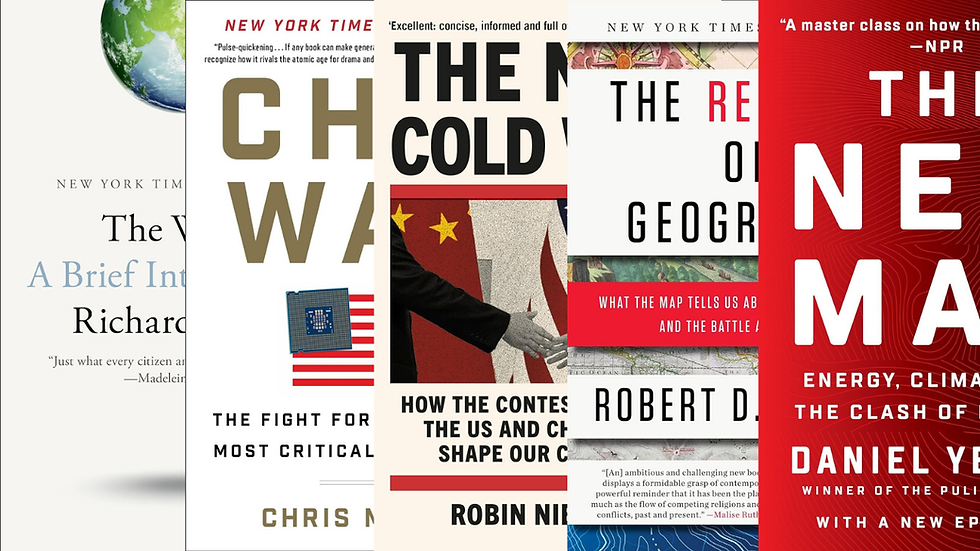
Compared with Prisoners of Geography by Tim Marshall, Gaddis is more demanding and less beginner-friendly. Marshall is better for readers who want maps and geopolitical basics. Gaddis is better for readers who want to think about power, leadership, overreach, and strategic failure.
Compared with The Back Channel by William J. Burns, Gaddis is less practical about diplomacy itself. Burns shows how diplomacy works inside government. Gaddis explains the broader habits of judgment that should guide leaders before, during, and after major decisions.
Conclusion
On Grand Strategy is worth buying for readers who want a serious, readable, and durable education in strategic judgment. Its main value is not practical instruction. Its value is the way it teaches the reader to think about proportion: goals must fit resources, moral purpose must face reality, and ambition must be disciplined by limits.
The book is not ideal for every buyer. It may disappoint readers looking for a modern strategy manual, current geopolitical analysis, or step-by-step professional tools. It can also feel broad or indirect to readers who prefer sharper instruction.
Still, the buying judgment is positive. For readers interested in diplomacy, international relations, military history, leadership, and world affairs, On Grand Strategy is a strong addition to the shelf. Buy it for judgment, restraint, historical perspective, and long-term intellectual use. Skip it only when the immediate need is a practical toolkit.
Also Read
8. FAQ
8.1 What is On Grand Strategy about?
On Grand Strategy is about how leaders connect large ambitions with limited capabilities. John Lewis Gaddis uses historical, literary, political, and military examples to show why strategic success depends on proportion, timing, restraint, and adaptability. The book is less about memorizing doctrine and more about learning how to judge difficult situations.
The central lesson is that strategy fails when goals outrun means. A leader may have courage, intelligence, and moral conviction, but those qualities are not enough when resources, geography, institutions, or timing do not support the plan. This makes the book useful for readers interested in diplomacy, international relations, leadership, military history, and political decision-making.
8.2 Is On Grand Strategy worth reading?
Yes, On Grand Strategy is worth reading for serious readers who want to improve strategic judgment. It is especially valuable for people interested in history, power, foreign policy, leadership, and the relationship between ambition and constraint. The book helps readers think more clearly about overreach and the limits of political action.
It is not worth reading as a quick manual. Buyers who need templates, frameworks, or modern policy tools may find it too indirect. The book’s value comes from historical reflection, not operational guidance. Readers who accept that before buying are more likely to appreciate it.
8.3 Is On Grand Strategy beginner-friendly?
On Grand Strategy is beginner-friendly for educated readers, but it is not simplistic. You do not need formal training in grand strategy, military history, or international relations to follow the main argument. Gaddis gives enough context to keep most serious readers oriented.
The book may feel demanding for readers who prefer very short chapters, simplified explanations, or modern examples only. A beginner with curiosity about history and politics can handle it. A beginner looking for a basic geopolitics introduction may prefer something more direct before reading Gaddis.
8.4 Is this book useful for international relations students?
Yes, On Grand Strategy is useful for international relations students because it connects theory, history, leadership, and statecraft. It helps students see strategy as more than military planning. Strategy also involves politics, institutions, timing, geography, alliances, moral purpose, and the limits of power.
The book should not replace an international relations textbook. It does not systematically explain realism, liberalism, constructivism, or foreign policy analysis. Its best use is complementary. Read it alongside IR theory, diplomatic history, and security studies to build better judgment about how leaders make strategic choices.
8.5 Is On Grand Strategy practical?
On Grand Strategy is practical in an indirect way. It will not give the reader policy templates, decision trees, negotiation scripts, or planning exercises. A buyer looking for immediate professional tools may need another book.
Its practical value lies in the questions it teaches. Are the goals realistic? Do the available means support the desired outcome? Has the leader mistaken confidence for strategy? Has the plan ignored geography, institutions, time, or human weakness? Those questions are useful in diplomacy, public policy, military leadership, business, and personal decision-making.
8.6 Do I need to know military history first?
No, prior military history knowledge is not required. The book includes military and political examples, but Gaddis explains them through the broader theme of strategic judgment. Readers can follow the main argument without specialist training.
That said, readers with some background in history, diplomacy, international relations, or political thought will get more from the book. They will recognize more references and understand more of the context. For motivated general readers, the book remains accessible, but it rewards careful attention.
8.7 Why do some readers criticize the book?
The main criticism is that On Grand Strategy is not direct enough. Some buyers expect a practical guide and instead find a broad historical and literary discussion. That gap between expectation and reading experience explains many negative reactions.
Other criticisms focus on scope. Some readers want more modern cases, more policy relevance, or deeper analysis of specific strategic traditions. These criticisms are fair, but they do not destroy the book’s value. They simply show that Gaddis wrote a reflective book about judgment, not a technical guide to contemporary grand strategy.
8.8 Which format is best?
The paperback or ebook is the better choice for serious study. On Grand Strategy includes ideas, names, historical examples, and conceptual contrasts that are easier to revisit in text. Readers who like underlining, note-taking, or returning to specific passages should choose a written format.
The audiobook can work for commuting, walking, or casual listening. The risk is that important connections may pass too quickly. Strategy books usually reward slow reading. For convenience, audio is useful. For serious learning, a paperback or ebook is safer.